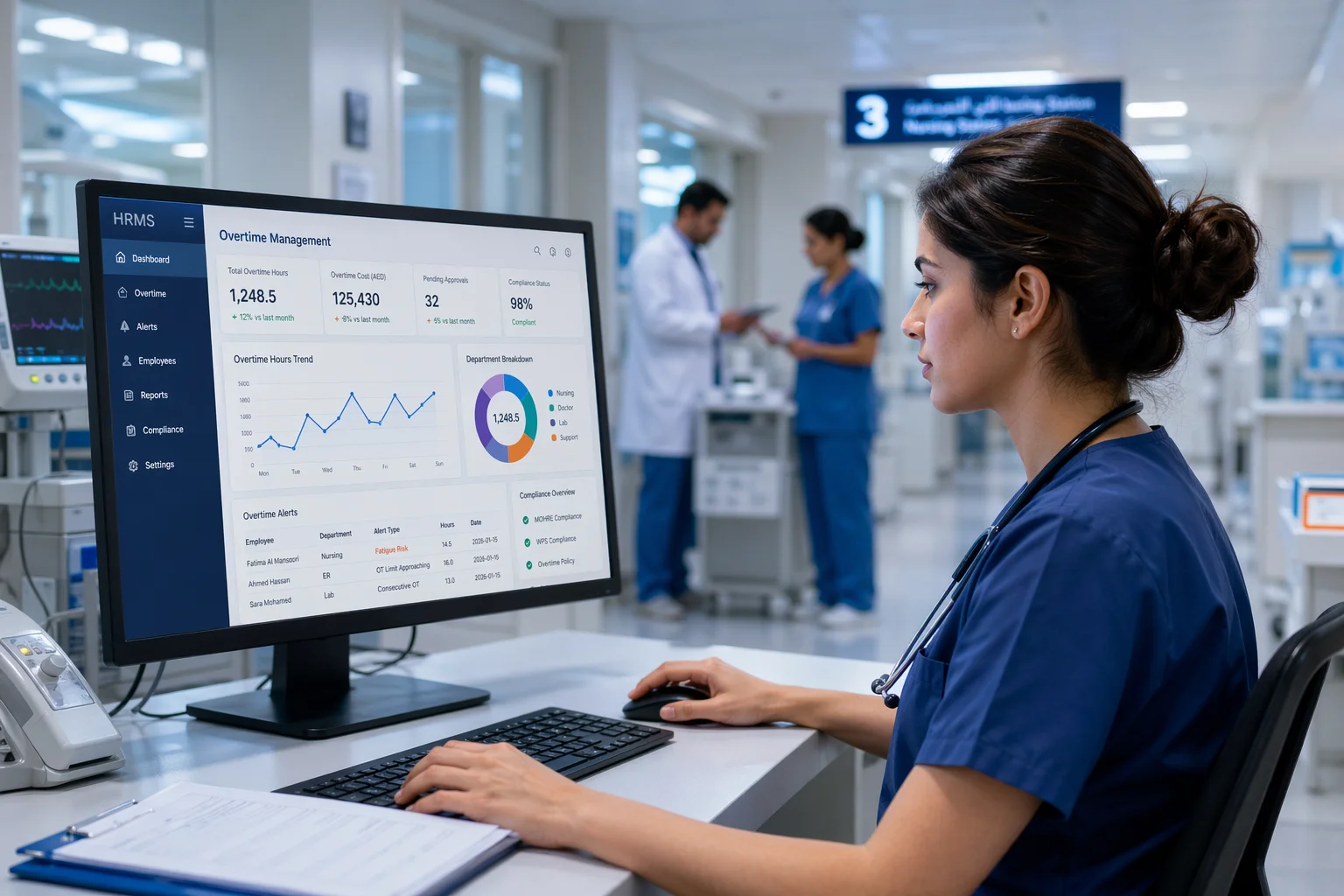
In the world of healthcare, we often talk about the golden hour or the critical window. We understand that in clinical care, time is not just a resource; it is the very fabric of patient outcomes. But as a CEO and advisor who has spent years looking at the operational backbone of hospitals across the UAE, I’ve noticed a painful irony. While we invest millions in state of the art diagnostic equipment and life saving technologies, the systems we use to manage the people behind that care are often stuck in the past.
Nowhere is this more evident than in the management of overtime. In 2026, healthcare workers are facing unprecedented levels of demand. From the bustling trauma centers of Dubai to specialized hospitals in Abu Dhabi, our nurses, doctors, and support staff are the heroes of our society. But when we manage their extra hours through manual logs, messy spreadsheets, or rigid, unfeeling software, we aren't just being inefficient. We are failing the people who care for us.
I want to talk about how we can automate overtime in a way that feels human. We need a system that protects the hospital’s bottom line without treating our caregivers like cogs in a machine.
The Hidden Weight of Manual Overtime
Let’s be honest about what happens on a hospital floor. A shift is ending, but a patient’s condition stabilizes just as the handoff begins. A nurse stays an extra ninety minutes to ensure the next shift is fully briefed. In a manual system, that nurse has to remember to log those minutes on a paper sheet or navigate a clunky portal days later.
This creates a "Manual Tax" on their spirit. When a caregiver has to fight for their overtime pay, or when their extra effort goes unrecognized because of a rounding error, trust is broken. From a business perspective, this administrative lag also creates a blind spot. As a CEO, if you only see your hospital's OT costs at the end of the month, you are looking at a rearview mirror. You cannot adjust staffing levels or prevent burnout if you are always reacting to old data.
Empathy Through Precision
A common misconception is that automation is cold or robotic. I argue the opposite. True empathy in healthcare management is providing a system that is so precise that the employee never has to worry about the accuracy of their paycheck.
When we use a high precision OT engine that reconciles biometric punches against hospital shift rosters in real time, we are telling our staff: "We see every minute you give to this hospital, and we value it." By stopping the practice of rounding down, we build a foundation of respect. If a lab technician stays fifteen minutes late to finish a critical test, they should be paid for fifteen minutes, not zero because the system only rounds by the hour.
Precision eliminates the friction of disputes. It removes the need for an exhausted nurse to sit in an HR office on their day off, arguing about a shift they worked three weeks ago. That, to me, is empathetic leadership.
Protecting the Caregiver: The Fatigue Safeguard
In 2026, the biggest threat to healthcare quality isn't a lack of tech; it is clinician burnout. When we talk about business priorities, we must remember that "Retention ROI" is far more valuable than "Labor Cost Savings." Replacing a specialized ICU nurse in a large hospital costs significantly more than paying a bit of overtime, but the real cost is the loss of institutional knowledge.
Automation should act as a guardian. An intelligent system does not just calculate pay; it monitors fatigue. If a nurse has worked three consecutive twelve hour shifts and is approaching a dangerous OT threshold, the system should trigger a Care Alert to the nursing supervisor.
Empathy means stepping in and saying, "You’ve given enough; it’s time for you to rest." By hard coding mandatory rest intervals into our digital hospital rosters, we protect our staff from exhaustion and our patients from the errors that fatigue inevitably brings. A hospital that manages its OT with a focus on wellbeing is a hospital that maintains a high performance culture without sacrificing its soul.
The Business Case: Reclaiming EBITDA with Care
While the heart of this discussion is human, we cannot ignore the financial reality. Hospitals are complex businesses with thin margins. "Wage Leakage," which is overpayment due to manual errors or buddy punching, is a silent killer of hospital EBITDA.
In a manual environment, OT costs often balloon because of a lack of oversight. By automating the OT workflow, we achieve second level accuracy. This isn't about being stingy; it is about being responsible. Every dirham saved on administrative errors or unverified time theft is a dirham that can be reinvested into better equipment, higher base salaries, or more staff for the hospital.
Furthermore, the UAE has a very specific regulatory landscape. With MOHRE mandates and the Wage Protection System (WPS), the legal risks of inaccurate payroll for hospitals are high. An automated engine ensures that your holiday rates, night differentials, and weekend premiums are calculated perfectly every time. You move from being at risk to being audit ready. This operational stability is what allows a healthcare institution to scale and invest in the future.
Scaling the Human Connection
As we move further into 2026, the goal of technology in healthcare is to make the administrative part of the job invisible. We want our doctors and nurses to spend their time with patients, not with payroll queries.
When you remove the administrative bloat, you empower your leaders. A Head of Nursing in a multi specialty hospital should be a mentor and a coach, not a data entry clerk. By automating the mundane, we return the human side to healthcare. We create an environment where the staff feels supported by a system that is fair, fast, and transparent.
Engineering a Resilient Future
In my years as an advisor, I have seen that the most resilient hospitals are those that treat their people as their primary competitive advantage. They understand that a happy, well rested, and fairly paid workforce is the best way to ensure high patient satisfaction and clinical excellence.
Investing in a specialized HRMS for hospitals is the first step toward this transformation. It provides the digital backbone required to manage complex shifts while maintaining a personal touch. When you pair this with an HRMS software UAE, you ensure that your institution is perfectly aligned with local labor laws and the high standards of the Emirates.
Ultimately, the journey toward overtime automation is about more than just numbers. It is about honoring the dedication of our healthcare heroes. It is about building a system that cares for the caregivers, so they can continue to care for us. In 2026, the hospitals that win will be the ones that use technology to amplify their humanity, not replace it.
How much administrative friction is currently weighing down your clinical teams? Is your overtime management a source of trust or a source of tension? It might be time to put your people's operations on a path toward empathy and efficiency.