In the world of agile delivery, we often talk about "technical debt"; the cost of choosing a quick, messy fix over a scalable architecture. But for UAE startups scaling across Dubai, Abu Dhabi, and the Northern Emirates, there is a deadlier, silent killer: HR Operational Debt.
As a Project Manager, I see HR as a way to manage resources, improve workflows, and handle dependencies. In 2026, manual HR is not just an "admin task." It is a bottleneck that slows down your sprint velocity.
Here are the top 10 reasons why an AI-powered HRMS is a mission-critical tool for any high-growth UAE startup, from a PM’s point of view.
1. Eliminating the "Onboarding Lag"
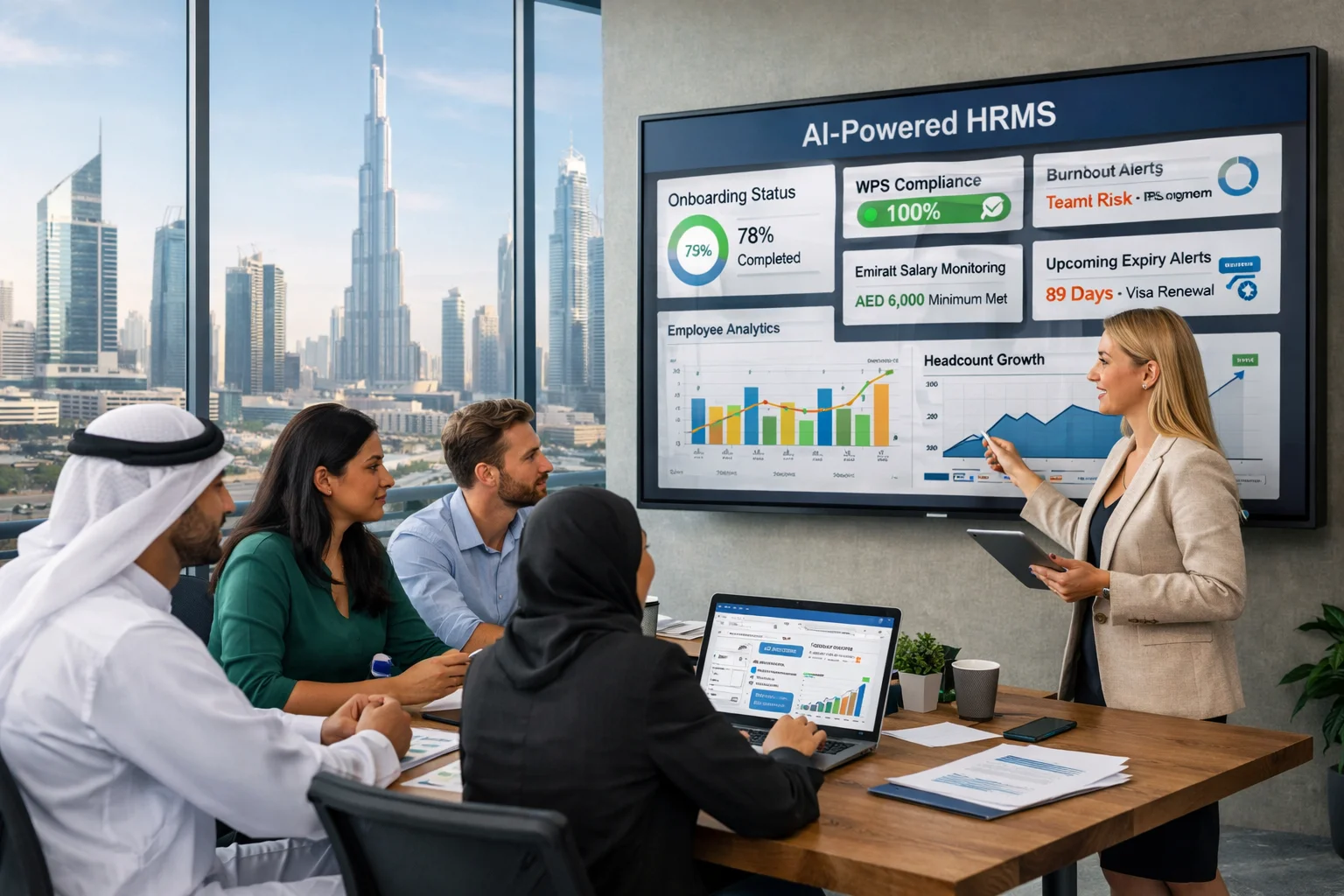
From a project perspective, each day a new hire isn't "ready to ship" slows down your team's speed. In Sharjah or Ajman, collecting documents for Visas and IDs by hand can take days. An AI HRMS in the UAE cuts this down to a 15-minute digital self-service process. When onboarding is automated, the time it takes for a new engineer to deliver value drops significantly, helping you stay on schedule with your roadmap.
2. Zero-Error WPS 2.0 Compliance (Risk Mitigation)
In the UAE, compliance is a high-impact project risk. The 2026 WPS 2.0 updates are essentially project constraints, a single SIF file error can block your trade license and stop all hiring. AI-powered validation acts as an automated QA gate, catching errors before they reach the bank, ensuring your legal standing is "Ready" so you can focus on delivery.
3. Closing Talent Before the Sprint Starts
Recruitment is a critical dependency. If we need a Senior Dev for a Q3 launch, we can't afford a 3-day turnaround on an offer letter. AI automation allows us to generate and sign offers in 60 seconds. In the competitive talent markets of Dubai and Abu Dhabi, this speed is the difference between hitting a milestone and missing a launch date.
4. Managing the AED 6,000 Emirati Minimum Wage
As of January 2026, the mandatory floor for Emirati staff is AED 6,000. Tracking this manually across a growing team is an audit nightmare. An AI HRMS automatically flags any salary records below this threshold, ensuring you stay aligned with Nafis subsidies and avoid the AED 108,000 penalties for non-compliance.
5. Predictable Velocity via Burnout Analytics
Project success depends on team health. AI doesn't just track hours; it tracks sentiment. By using mood tracking and intervention analytics, the system can flag a team in Ras Al Khaimah that is nearing burnout before the "Resignation Bug" hits. This allows for proactive resource leveling rather than reactive crisis management.
6. Automated "National Constraints" Sync
Seasonal shifts like reduced hours during Ramadan or the Midday Break rule (June 15 – Sept 15) are predictable project variables. An AI HRMS automatically adjusts rosters and overtime triggers across all 7 Emirates. It’s like having an automated "Calendar Sync" for national labor laws, ensuring project plans respect local constraints without manual recalculations.
7. Zero-Training Adoption (UX as a Feature)
As PMs, we know the best tool is useless if the team won't use it. Traditional HRMS platforms suffer from high "Interface Debt." By using a chat-first, AI-driven UI, we remove the learning curve. If a developer in Fujairah can request leave via a simple chat, adoption hits 95%+, and the team spends zero time on "tool training."
8. Strategic Resource Alignment (OKRs)
AI links daily tasks to high-level business objectives. When every team member sees how their specific "Ticket #402" contributes to the company’s 2026 growth OKRs, engagement skyrockets. This alignment turns "task-doers" into "product-owners," which is the secret sauce of high-performing agile teams.
9. Document Integrity & Asset Security
From a governance perspective, tracking company assets and employee documents is a security requirement. AI alerts act as a "Continuous Integration" check for your legal health, flagging expiries 90 days out so the PRO can renew them without a "Critical Issue" ticket being raised.
10. Scaling Without "Administrative Bloat"
The "Startup Trap" is hiring an HR person for every 20 employees. AI HRMS in the UAE lets you scale your headcount while keeping your overhead lean. It automates 80% of routine queries, allowing you to invest that "saved" budget back into your engineering or sales teams, the people who actually build the product.
Efficiency is a Feature, Not an Afterthought At Kiework, we don't just build HR software we build operational infrastructure. As a Project Manager, my goal is to ensure our platform removes the friction that slows you down. Whether you’re a 10-person team in Umm Al Quwain or a 100-person powerhouse in Dubai, our startup AI HRMS is designed to help you automate the mundane, eliminate HR debt, and focus entirely on your mission.