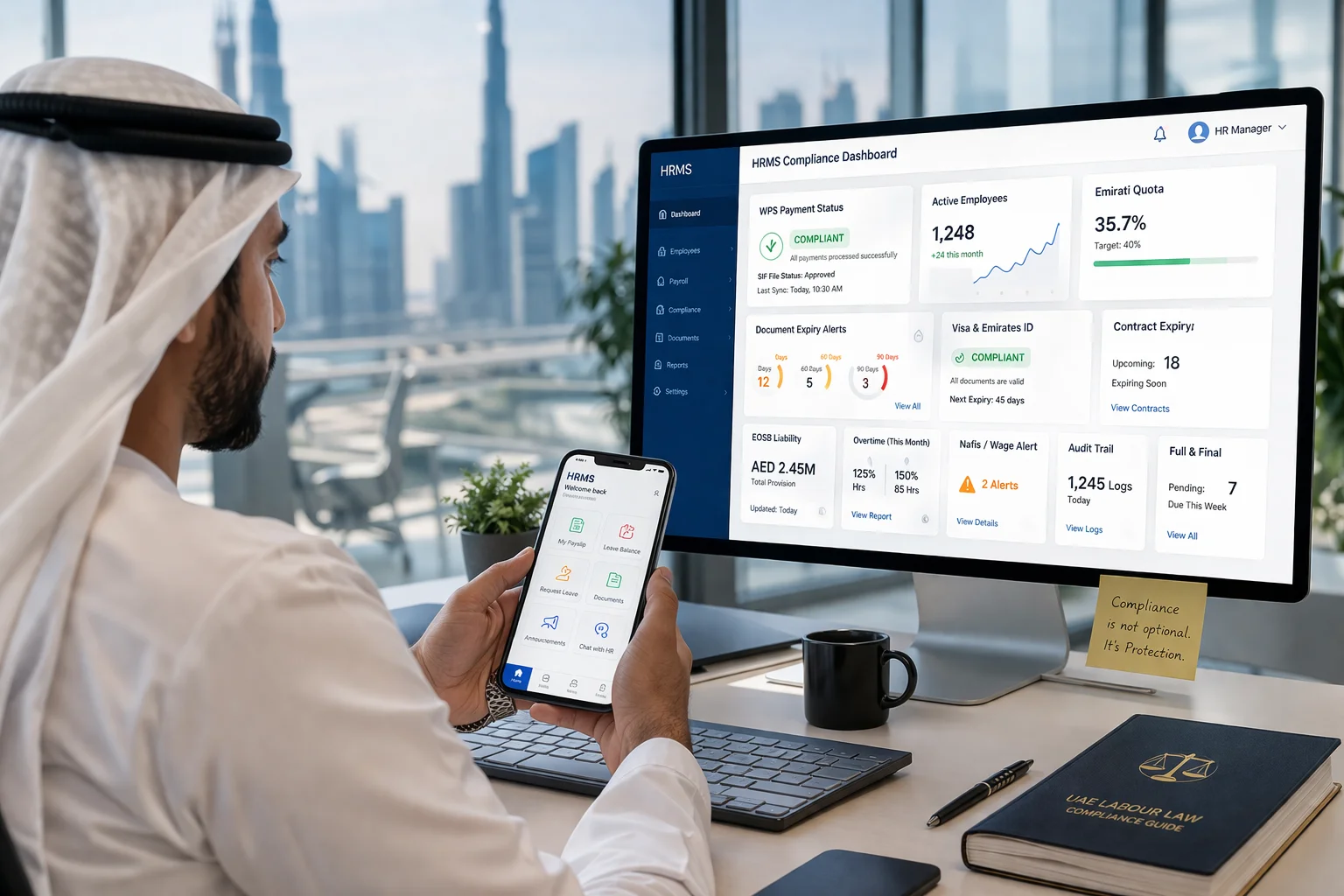
I have spent a lot of time talking to business owners from the bustling streets of Dubai to the industrial hubs of Sharjah and the quiet corporate offices in Fujairah. If there is one thing I have learned as we navigate 2026, it is that HR is no longer just about hiring and firing. It is about staying one step ahead of a regulatory landscape that moves faster than a weekend in Ras Al Khaimah.
In the UAE, the importance of compliance has never been greater. Whether you run a high-growth startup in Abu Dhabi or a large manufacturing plant in Umm Al Quwain, your HRMS must be more than just a digital filing cabinet. It should be your most trustworthy compliance partner. After examining changes in MOHRE regulations and recent labor law updates, I have compiled a list of ten essential features your HRMS needs this year.
1. Real Time WPS Automation
The Wages Protection System is the heartbeat of UAE payroll. In 2026, simply generating a SIF file is not enough. I believe the best systems now offer real time validation. This means the software checks your 13 digit Labor Establishment ID and employee IBANs against the latest Central Bank formats before you even hit export. For businesses in Ajman or Dubai, this prevents the nightmare of a rejected batch that could lead to labor blocks.
2. Automated EOSB (Gratuity) Engines
Calculating End of Service Benefits (EOSB) used to be a manual headache involving spreadsheets and a lot of prayer. Today, I look for an HRMS that automates this based on the specific "Basic Salary" definitions updated in the latest labor laws. It should automatically account for unpaid leave days and apply the 21 day or 30 day multipliers accurately. This is especially critical for the healthcare sector where long tenures are common and accuracy is a legal mandate.
3. Proactive Visa and Document Tracking
I have seen too many companies in Al Ain and Fujairah hit with massive fines because an Emirates ID or a trade license expired unnoticed. A modern HRMS must provide a 30, 60, and 90 day countdown for every document. It should send automated nudges not just to the HR manager, but to the employees themselves. When you are managing hundreds of staff in retail, these automated alerts are the only way to ensure 100% renewal success.
4. Unified Fixed Term Contract Management
Since the UAE switched to fixed term contracts, managing expiry dates and renewals has turned into a full-time job. I suggest using a system that digitizes the entire contract process. It should alert you when contracts are close to their three-year limit and enable smooth digital renewals that connect directly to your payroll records. This way, you stay ready for any unexpected MOHRE inspections.
5. Emirati Minimum Wage & Quota Monitoring
With the 2026 mandate requiring a minimum wage of AED 6,000 for Emirati nationals in the private sector, your HRMS needs to be a watchdog. I look for a dashboard that tracks your Nafis targets in real time. If a salary falls below the threshold or a quota is at risk, the system should alert you immediately to avoid those heavy monthly fines.
6. Industry Specific Shift Management
The needs of a manufacturing facility in Umm Al Quwain are worlds apart from a tech startup in Dubai. I value an HRMS that handles complex shift rotations, overtime calculations (at the 125% or 150% legal rates), and Ramadan hour adjustments automatically. If your software does not know when to reduce the workday to 6 hours, it is costing you money and compliance points.
7. AI Powered MOHRE Job Classifiers
One of the trickiest parts of onboarding is mapping your internal job titles to the official MOHRE standards. In 2026, I expect an HRMS to use AI to suggest the correct classification. This ensures that your labor contracts and visa applications are consistent, reducing the risk of rejection at the government level.
8. Self Service for a Mobile First Workforce
In the UAE, nearly everyone uses a smartphone. A chat-first or mobile app approach is crucial. Whether a delivery driver in Sharjah is requesting leave or a nurse in Abu Dhabi is checking their payslip, the interface should be as simple as sending a WhatsApp message. This kind of accessibility cuts the administrative workload on your HR team by at least 80%.
9. Digital Audit Trails for Governance
Compliance is not just about doing the right thing; it is about proving it. Every change to a salary, every leave approval, and every asset recovery must be logged. I prefer a system that creates a "Compliance Committee" ready environment where every action is timestamped and attributed. This is a lifesaver during internal audits or legal disputes.
10. Seamless F&F Settlement Workflows
The Full and Final settlement is often where relationships sour. A top tier HRMS handles the 14 day settlement rule in the UAE with ease. It should automatically pull data from asset tracking, leave encashment, and the gratuity engine to produce a legally airtight settlement letter.
As we move through 2026, the gap between "running payroll" and "managing compliance" is closing. If your current tools feel like they are dragging you back into 2020, it might be time to look at how modern automation can protect your trade license and your peace of mind. If you are ready to see how these features look in action for your specific industry, you can explore HRMS software UAE solutions that are built for this exact landscape.