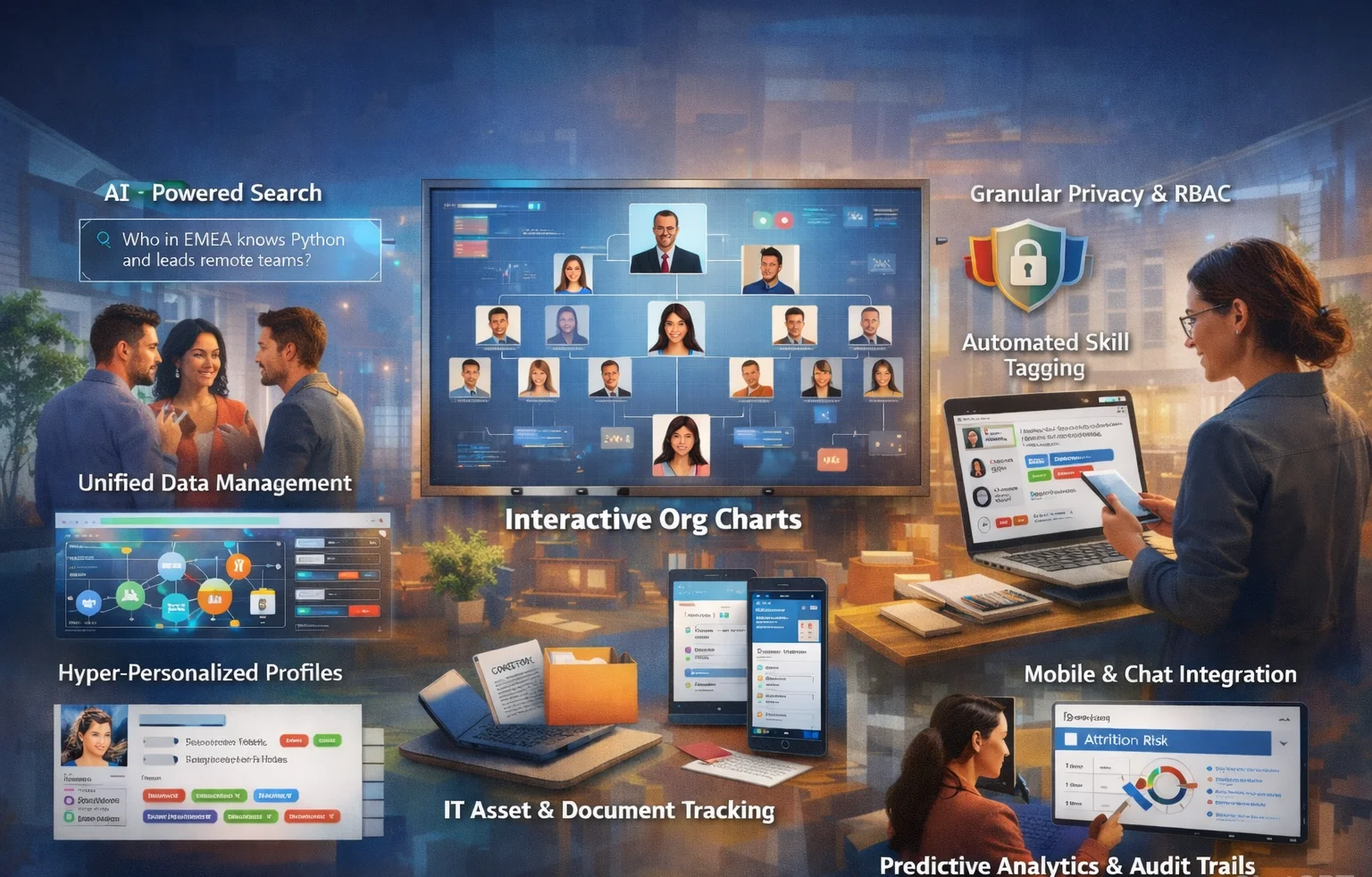
In the changing world of 2026, the old "corporate phonebook" is no longer useful. As hybrid work becomes the global norm and artificial intelligence mixes into every part of the office, the tools we use to connect need to do more than simply list names. Today, organizations see their digital employee directory as the strategic heartbeat of their culture and operations.
According to research from Gartner, the rise of "Agentic AI" and multi-agent systems is transforming how businesses orchestrate complex workloads. This shift demands that HR technology move away from static lists toward dynamic, intelligent ecosystems.
Here are the top 10 features your directory software must have to stay competitive in 2026.
1. AI-Powered "Natural Language"
Search Forget scrolling through a massive list just to find one person. In 2026, employee directories don’t work like old databases anymore. You don’t need to know someone’s name to find them. You can type something like, “Who in the EMEA region has experience with Python and has led a remote team?” and the system understands what you’re really looking for. It reads the meaning behind the question and pulls up people who match those skills, making it much easier to connect with the right expert at the right time.
2. Unified Employee Data Management
Data silos are the enemy of efficiency. Your directory should not exist in a vacuum; it must be built upon a foundation of robust Employee Data Management. This ensures that when a record is updated whether it's a promotion, a new certification, or a change in bank details; the information reflects across payroll, IT assets, and the public directory in real-time.
3. Interactive, Real-Time Org Charts
As companies restructure more frequently to stay agile, static org charts become outdated within weeks. Modern software provides interactive, drag-and-drop visualizations that update automatically. This helps new hires understand reporting lines and assists leadership in planning successions or departmental shifts.
4. Granular Privacy and RBAC
As data privacy laws like the Digital Personal Data Protection Act and the General Data Protection Regulation become stricter, organizations can no longer treat employee information lightly, and security has to be part of everyday operations. With role based access control, companies can keep their internal directory useful for collaboration while still protecting sensitive details such as home addresses and national ID numbers, ensuring that only authorized individuals can view personal data and reducing the risk of misuse.
5. Automated Skill Tagging
The "Skills-First" hiring trend has moved internally. Modern directories use AI to scan employee resumes, project histories, and LinkedIn profiles to automatically suggest skill tags. This makes internal mobility seamless and helps managers find the right talent for short-term projects without manual tracking.
6. Mobile-First "Chat-Integrated" Interface
In 2026, work happens on the go. A top-tier directory must offer a high-performance mobile app. Features like "one-tap" calling, Slack/Teams integration, and WhatsApp-style instant messaging directly from a profile ensure that the workforce stays connected regardless of location.
7. Hyper-Personalized Employee Profiles
The "human" side of HR is back. Beyond job titles, 2026 directories feature personalized bios, work anniversary countdowns, preferred pronouns, and "how I like to work" badges. This fosters empathy and connection in a world dominated by digital interfaces.
8. Integrated IT Asset & Document Tracking
Why use three different tools when one can do the job? Advanced platforms link employee profiles directly to their assigned hardware (laptops, monitors) and digital documents (contracts, NDAs). When an employee views their profile, they can see exactly what company property they are responsible for.
9. Employee Self-Service (ESS) Portals
Empower your workforce to take ownership of their data. By providing an intuitive self-service portal, employees can update their own bios, emergency contacts, and skills. This reduces administrative friction and ensures that the data in your digital employee directory is always fresh.
10. Predictive Analytics and Audit Trails
Knowing who is in your company is step one; knowing how they are moving is step two. Predictive analytics can highlight departments with high turnover risks or identifying "super-connectors" within the company. Meanwhile, a detailed audit trail tracks every change made to a profile, ensuring your Employee Data Management remains compliant and secure.
The Future is Human-Centric
As we navigate the complexities of a machine-assisted era, the goal of HR technology remains the same: to bring people closer together. By selecting a platform that prioritizes these ten features, you aren't just installing software; you are building a more transparent, efficient, and human-centric organization.
Kiework is designed specifically to meet these 2026 standards, offering a chat-first, AI-driven platform that puts the "Human" back in Human Resources.