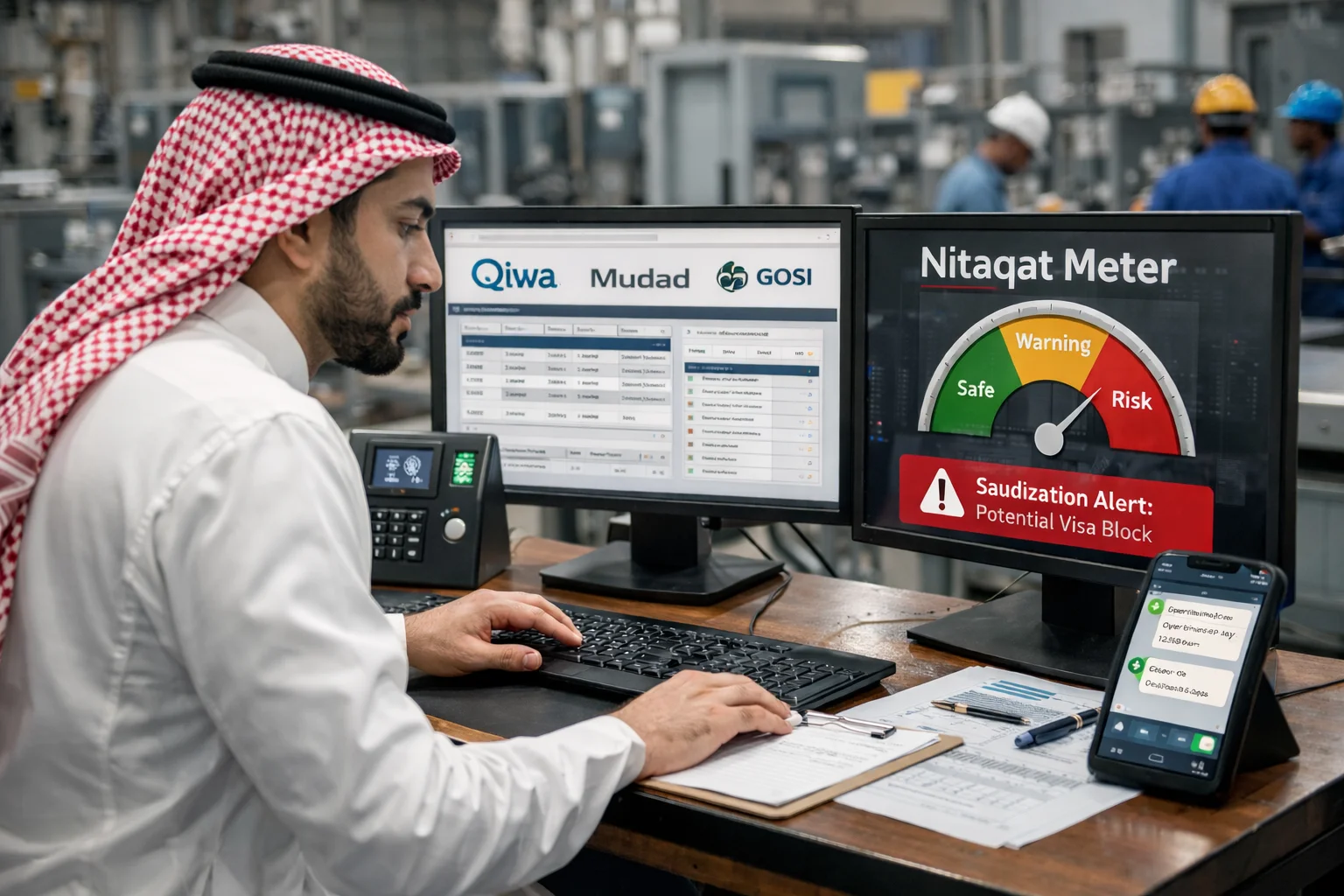
Testing HR software is about more than finding bugs in the code. It is about making sure a factory worker in Dammam gets their overtime pay exactly right and that the company stays on the right side of Saudi labor laws.
As a QA Engineer, I look at an HRMS like a machine on the production line. If one gear slips, the whole factory can face a compliance audit or a visa freeze. In 2026, a manufacturing plant in Saudi Arabia needs more than just a digital punch clock. It needs a system that is as smart as the people running the machines.
The Big Three: Qiwa, Mudad, and GOSI
In 2026, everything in Saudi HR is connected. If your internal records do not match the government portals, you have a major problem. From a testing perspective, we look for a triple handshake between systems. When a supervisor gets a raise, the software should not just update a spreadsheet. It needs to push that contract change to Qiwa and make sure the Mudad salary file is perfect. If there is even a one-riyal difference, it is a critical bug that breaks trust. We run scripts to ensure these three systems are always talking to each other.
Watching the Nitaqat Meter
The Nitaqat system is stricter than ever this year. For a factory with hundreds of workers, tracking your Saudization percentage manually is impossible.
The HRMS needs predictive measures. Instead of informing you that you entered the Yellow zone after the fact, the system should alert you before you hire someone. We test this by simulating different scenarios. If a group of Saudi engineers resigns, does the system notify the manager right away about a potential visa block? That is the kind of reliability a plant manager requires.
Biometrics and Prayer Breaks
Manufacturing is a 24/7 business. In Saudi Arabia, that means managing complex three-shift rotations while respecting prayer times.
We check the connection between the physical biometric turnstiles and the payroll engine. The logic must be very precise. It needs to calculate overtime according to Saudi Labor Law, which is typically 1.5 times the pay for extra hours, without penalizing workers for scheduled prayer breaks. If the system cannot handle a split shift or a sudden line change, it is not prepared for a factory floor.
Mobile First for the Shop Floor
Most factory workers do not sit at desks with laptops. If they have to go to an office just to check their leave balance or view a payslip, the system has failed.
The best HRMS now uses a chat-based interface like WhatsApp. A worker should be able to ask the AI how much overtime they earned this week and get an instant, accurate answer. This transparency stops small misunderstandings from turning into big labor disputes.
Quality in an HRMS is not just about smooth buttons or pretty colors. It is about compliance immunity. HR Software for a manufacturing business in Saudi Arabia must be as dependable as the power grid. When the tech works perfectly, the people can focus on production.