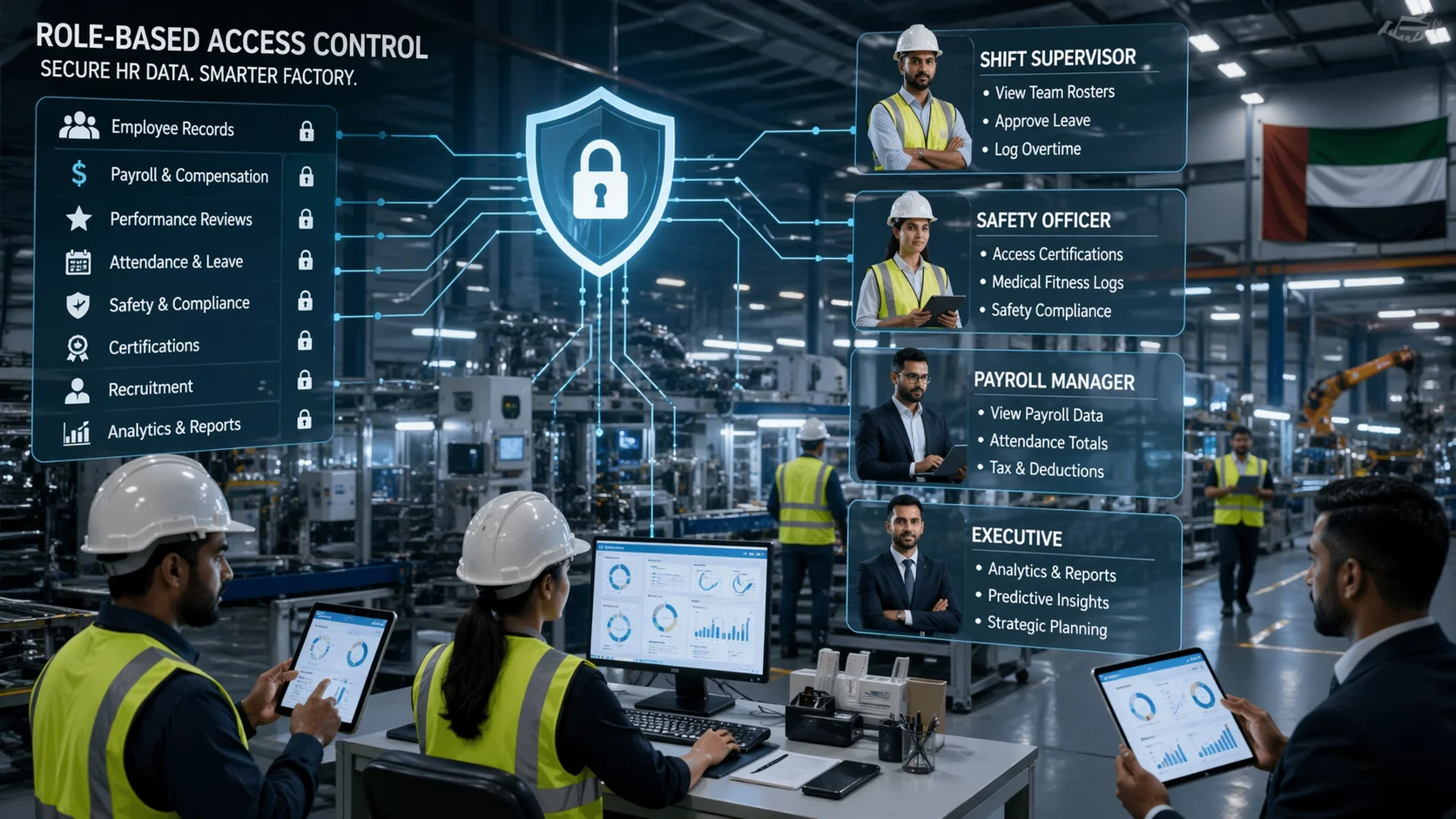
In my years managing technology driven projects, I have seen that the most successful implementations aren't just about the newest feature; they are about the smartest control. As we navigate the industrial landscape of the UAE in 2026, the manufacturing sector is undergoing a massive digital shift. We are moving from traditional floor management to smart factories where data is as valuable as the raw materials we process.
However, with more data comes more risk. In a manufacturing plant, you have a diverse hierarchy ranging from floor supervisors and specialized engineers to finance heads and C suite executives. Each of these individuals needs information to do their jobs, but they don't all need the same information. This is where Role Based Access Control (RBAC) moves from being technical jargon to a strategic necessity for the UAE’s industrial future.
The Problem of Data Spill on the Factory Floor
In many legacy systems, access to HR data was often an all or nothing affair. If a shift manager needed to check the attendance of their team, they might inadvertently gain access to their salary details, home addresses, or private performance reviews. This is what I call Data Spill.
In a manufacturing context, this isn't just a privacy concern; it’s an operational hazard. When sensitive data is visible to the wrong people, it can lead to internal friction, skewed salary expectations, and a breakdown of the accountability culture we work so hard to build. In 2026, UAE labor laws and data protection regulations have become far more stringent. Managing a factory without granular control is like running a production line without safety guards.
What is RBAC in an HR Context?
At its core, Role Based Access Control is about creating Digital Perimeters. It ensures that a user’s access to the system is strictly limited to the functions required for their specific role.
Imagine a production plant in the Jebel Ali Free Zone. Under a robust RBAC framework:
The Shift Supervisor can view team rosters, approve leave, and log overtime but cannot see the bank details or basic pay of their subordinates.
The Safety Officer can access certification records and medical fitness logs for employees on high risk machinery but cannot view performance appraisal notes.
The Payroll Manager can see financial data and attendance totals but has no access to internal hiring notes or succession planning data.
This precision ensures that everyone has exactly what they need to be efficient, without the clutter or the risk of seeing what they should not.
Enhancing Security in the Era of AI
As we integrate more AI driven insights into our operations in 2026, the complexity of our data increases. We are now using predictive models to forecast labor needs and identify flight risks. This calculated intelligence is incredibly powerful, but it is also highly sensitive.
RBAC allows us to compartmentalize intelligence. We can ensure that only high level management can see the predictive attrition scores for a department, while department heads only see the actionable recommendations to improve engagement. By layering RBAC over our digital systems, we protect the integrity of our business data. It allows us to innovate with confidence, knowing that our intellectual property and our employees' privacy are locked behind role specific doors.
Operational Efficiency: Removing the Bottlenecks
One might think that more controls lead to more delays. In my experience as a Project Manager, the opposite is true. When everyone has access to everything, the system becomes a labyrinth of irrelevant menus and confusing data points.
RBAC simplifies the user experience. When a floor worker logs into their mobile portal, they should not see complex analytics dashboards or finance modules. They should see their shift schedule, their leave balance, and their payslip. By tailoring the interface to the role, we reduce training time and minimize the administrative friction that often slows down digital adoption. In 2026, a worker on a production line does not have time to navigate a complex HR portal; they need zero training interfaces that just work.
Compliance and the UAE Regulatory Landscape
The UAE has positioned itself as a global leader in digital governance. With the continuous updates to the Data Protection Law and the strict mandates of the Wage Protection System (WPS), manufacturing firms are under more scrutiny than ever.
RBAC provides an immutable audit log. If a sensitive file is accessed or a salary record is modified, the system records exactly who did it based on their assigned role. This level of traceability is essential for compliance audits. When MOHRE inspectors or internal auditors ask for a report, you can demonstrate that your data management is not just compliant, but architecturally secure.
Protecting the Human Element
Beyond the bits and bytes, RBAC is about respect. Every employee has a right to digital privacy. In the close knit environment of a manufacturing plant, knowing that your personal health records or your financial settlements are only visible to authorized personnel creates a sense of psychological safety.
When people feel their data is secure, they are more likely to engage with digital tools. They are more willing to participate in pulse surveys, upload their certifications, and use self service features. This trust is the fuel that drives digital transformation. In 2026, the most successful manufacturing firms in the UAE will be those that use technology to protect their people, not just track them.
Bridging the Gap Between IT and the Floor
In a project's lifecycle, the biggest hurdle is often the digital divide between the IT department and the operational teams. IT wants maximum security; the floor wants maximum speed. RBAC is the bridge between these two worlds. It allows for secure speed.
By defining custom roles, we can empower middle management to take ownership of their teams without compromising the integrity of the core HR database. We can give a project lead the ability to assign tasks and track hours for a specific project without giving them broader access to the company's organizational chart. This flexibility is what allows a modern manufacturing firm to remain agile in a fast moving market.
Engineering a Transparent Future
As we look toward the remainder of 2026 and beyond, the UAE's manufacturing sector will continue to evolve. We will see more robotics, more geofenced automation, and more real time data sync. But the core of the business will always be the people.
Securing the data of those people is a non-negotiable priority. By implementing role based access control within our digital infrastructure, we aren't just checking a security box. We are building a foundation of trust and efficiency that will sustain our growth for years to come.
The journey toward a smarter factory starts with a more secure HR system. Transitioning to an AI HRMS for UAE ensures that your security protocols are always in sync with local laws and industrial needs. When you choose a specialized HRMS for manufacturing, you are giving your team the tools they need to lead with confidence, knowing that the digital safety guards are always in place.
Is your current system's data access as precise as your production line's machinery? How much of your administrative friction is caused by a lack of granular control over who sees what? It might be time to rethink how you protect your organization's most valuable asset: its information.