In the high-stakes environment of healthcare, the margin for error is non-existent. Unlike a corporate office where a scheduling conflict might delay a meeting, a staffing gap in an Intensive Care Unit (ICU) can directly impact patient outcomes. As we navigate 2026, the traditional, form-heavy HR systems of the past are being replaced by a new standard: the AI-powered HRMS for Hospitals.
This guide explores at how artificial intelligence is going beyond basic data entry. It is becoming the "operational brain" of managing clinical staff.
The Shift from Manual to Machine Intelligence
For decades, hospital HR departments relied on fragmented systems spreadsheets for rosters, paper files for nursing licenses, and punch cards for attendance. This fragmentation created "operational leakage," where fatigue-induced errors and compliance lapses became inevitable.
The modern HRMS for hospitals solves this issue by bringing together every part of the employee lifecycle into one AI-driven system. The goal is clear: let the machine manage the logistics, allowing medical professionals to concentrate on patient care.
1. AI-Driven Clinical Rostering: Ending the 5-Hour Headache
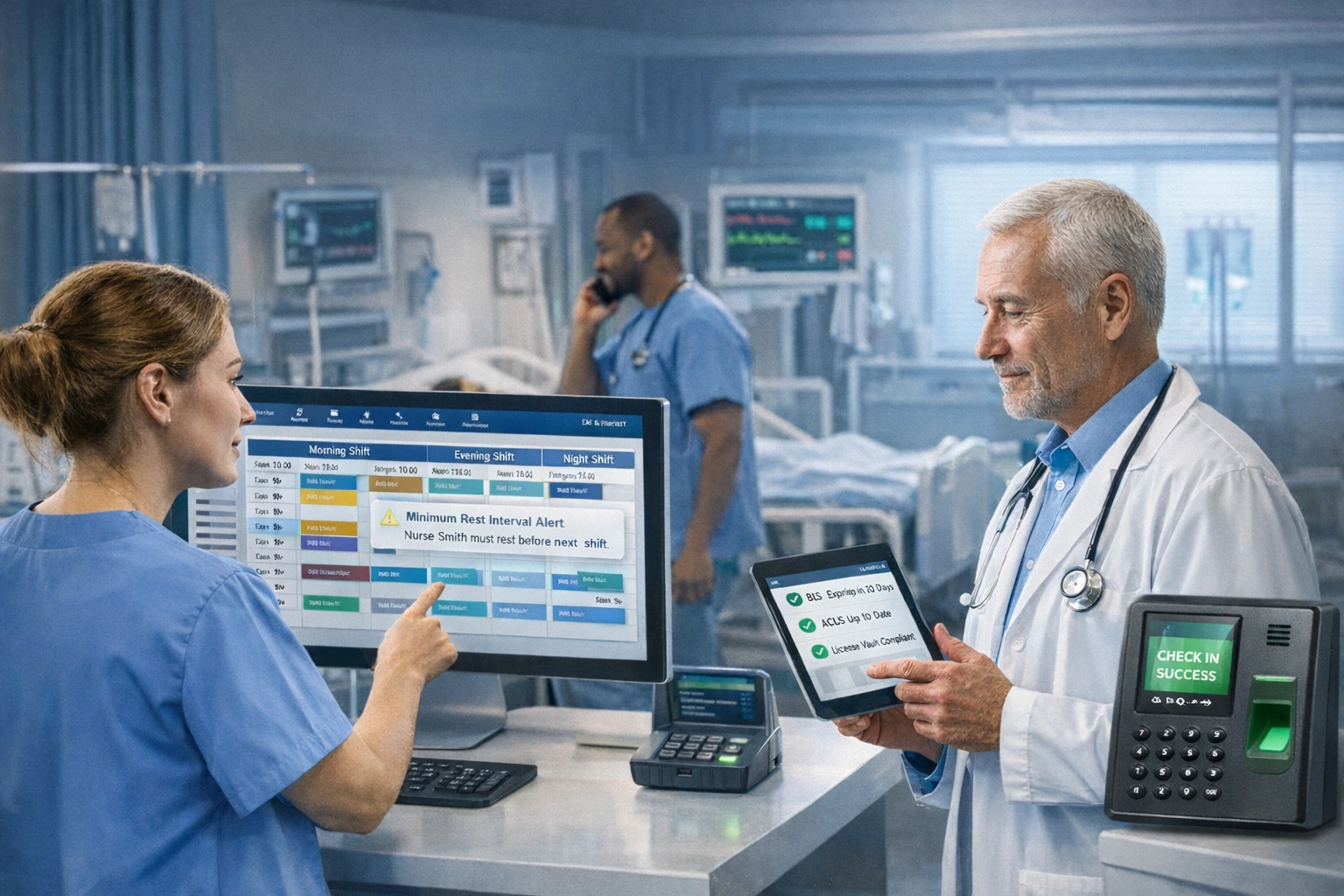
The most complex challenge in any hospital is the 24/7 rotating shift. Managing morning, evening, and night duties across multiple departments while accounting for emergencies and weekend rotations usually takes HR managers hours of manual labor. AI-powered engines have cut this time by more than 90%. By looking at historical peak traffic data and current patient loads, an AI HRMS can create an optimal roster in minutes. More importantly, these systems are aware of fatigue. They enforce Minimum Rest Intervals, which means a nurse who just finished a tough night shift won't be scheduled for the next morning by mistake.
2.The License Vault: 100% Compliance, 0% Risk
Healthcare is one of the most heavily regulated industries globally. Maintaining valid BLS (Basic Life Support), ACLS (Advanced Cardiovascular Life Support), and specialized nursing certifications for hundreds of staff members is an administrative nightmare. A specialized HRMS for hospitals serves as a proactive "License Vault." Instead of HR checking expiry dates manually, the AI monitors the database around the clock. When a certification is 30 days from expiring, the system sends automated reminders to the employee and notifies the department head. This keeps every professional on the floor legally qualified, ensuring 100% accreditation readiness.
3. Real-Time Attendance and Geofencing
In a sprawling hospital campus, knowing exactly who is on-site and where they are assigned is critical for emergency response. Modern systems utilize biometric hardware integrated with geofencing technology. This ensures that attendance "punches" are only valid when the staff member is within their designated ward. For the payroll department, this means zero "time theft" and perfectly accurate night-shift allowance calculations, even for complex, mid-month joiners.
4. Validating the "Trustbreakers"
As a QA professional in the HR tech space, I often talk about "Trustbreakers", bugs that ruin the relationship between a hospital and its staff. In a hospital setting, a "Trustbreaker" is a salary error or a missed leave update. AI-powered systems now use "Statistical Baselines" to prevent these. Before payroll is finalized, the AI compares the current cycle against the previous three months. If it detects an unusual spike or dip in a specific department's payouts, it flags it for human review. This proactive validation ensures that when an employee opens their payslip, the numbers are 100% accurate.
5. Seamless Onboarding for Non-HR Users
Hospitals are often managed by senior medical staff or founders who may not have a background in human resources. The 2026 standard for a hospital HRMS is the "Wizard-style" interface. This conversational, chat-based UI allows a Head of Nursing to onboard a new recruit or approve a leave request via a mobile app or even WhatsApp, without ever touching a complex HR form.
The Future is Automated
The transition to an AI-powered HRMS for hospitals is no longer a luxury, it is a necessity for institutional survival. By automating the "boring" but critical parts of HR compliance, rostering, and payroll. Hospitals can reduce burnout, increase staff retention, and ultimately provide better care to their patients.
At Kiework, we have created a specialized HRMS for hospitals that brings the human side back to healthcare. Our platform, from "License Vaults" to AI-powered rostering, meets the needs of 24/7 clinical care.